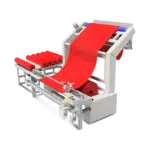
Preparation line of batches in plait
with automatic stitching and free brim
PRF
Joins rolls and produces free lap for finishing and dyeing

Future preparation
+30%

Output in
free flap

Flow rate up to
120
m/min

THEY TRUST US
PRF
Preparation line of batches in plait
PRODUCT OVERVIEW

Compact line for joining and preparing large batches of folded fabric, with automatic stitching and free delivery.

WHY CHOOSE PRF
BENEFITS

Prepare large batches in the groundwater

Reduces downtime and threading

Free layer ready for finishing

Accumulation table for rolls

Side roller conveyor for loading rolls

Future preparation system +30% productivity

Unwinding up to 120 m/min

Automatic stitching track

Free exit to the water table

Fixed or adjustable width brim

Circular mesh

Warp-weft fabric

Warp knit

Technical fabric

Non-woven fabric

Dyeing and finishing

Preparation of fabric in the layer

Fabric relaxation departments

Supply lines for continuous processes

MAIN TECHNICAL DATA
Explore the machine's key points
IN ACTION
VIEW THE UNIQUE PERFORMANCE OF PRF

Automatic splicing and layer preparation for large batches

Find out how PRF joins the rolls and prepares free lap for the following phases.

+ 0

PRODUCTS DEVELOPED

+ 0

TEXTILE COMPANIES AUTOMATED

0

YEARS OF EXPERIENCE IN TEXTILES

BENEFITS
INSTALLATION AND SUPPORT

Complete support from design through to commissioning, with direct ComatexCARE assistance

In depth

Lap fabric preparation line PRF | Comatex

Compact line for joining and preparing large batches of folded fabric, with automatic stitching and free delivery.

Frequently asked questions

Have questions? We have answers.

What is PRF used for?

Compact line for joining and preparing large batches of folded fabric, with automatic stitching and free delivery.

Which fabrics can PRF process?

Processable fabrics and materials: Circular mesh, Warp-weft fabric, Warp knit, Technical fabric, Non-woven fabric.

Can PRF be integrated into an existing line?

Lap fabric preparation line PRF can be evaluated for integration into existing textile production lines; interfaces and configuration must be defined according to the upstream and downstream equipment.